February 12, 2012
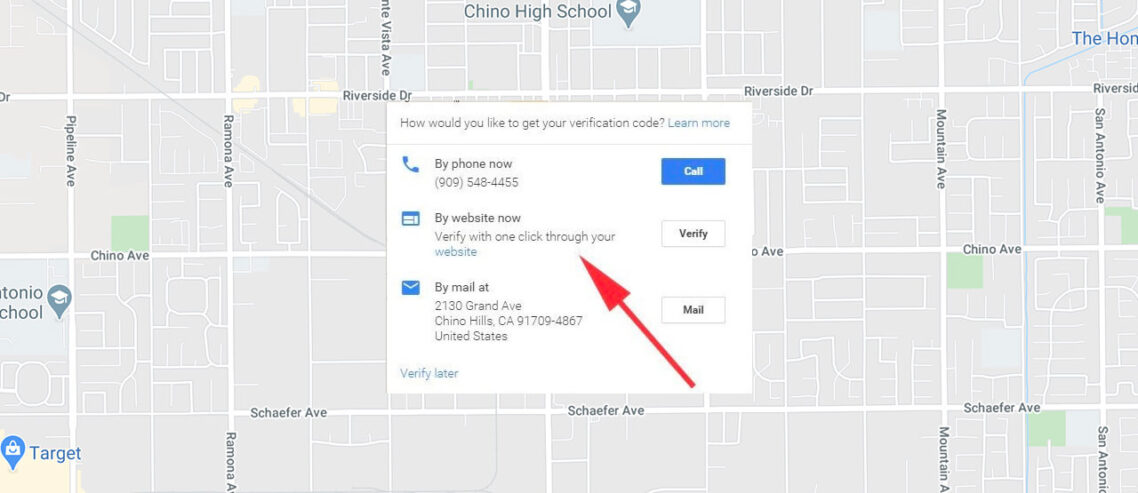
In Australia, Google uses the Australian Yellow Pages as the exclusive primary data source for Places and it is so noted on every page of business listings in the Maps results.
Yet this story from the forums of being able to buy your way into a multitude of Places listings by purchasing locations with the Australia YP rang true. While I have not verified all of the facts independently I have heard reports elsewhere of being able to create a large number of Places entries via the Yellowpages.
If true there is a certain irony in Google’s primary data supplier knowingly spamming Places for as little as $11 a listing. I fully understand that YellowPage’s have long accepted non local listings for the local YP directories as a revenue stream. Perhaps they don’t think of it as spamming. But they must know of Google’s guidelines requiring a real location and yet appear to have proceeded with the explicit acknowledgement of feeding the listings to Google.
Whether 1300 Florists used the Australian YellowPages or not, the Maps index is full of their spammy listings, without address and with the same phone number through out all of Australia.
Here is SweetAngel1988′s post from the forum: (more…)
Having first struggled with rick snippet markup for reviews and having recently struggled with implementing rel=”author” markup on several sites I was pleased to see AJ Kohn’s new Rich Snippets Testing Tool Bookmarklet.
With the tool I was able to check several sites very quickly, find minor problems and get the rel=”author” tag working properly. It makes a somewhat confusing task go more quickly by tightly integrating any webpage with Google’s Rich Snippet tool. If you are working with any of the rich snippet formats this bookmarklet is a boon. Kudos to AJ.

February 10, 2012
We’re up, we’re down. We’re not sure where we are.
Reader & TC Jim Jaggers alerted me to the fact that Google has changed the Google Places PO Box guidelines once again. In this new reading PO Boxes are definitely out. Suite numbers and box numbers are in. The new prohibition against moving the pin (a wide spread spam tactic to get a location in the city center without changing the address) is still in affect.
02/08/2012
Guideline |
02/10/2012
Guideline |
| Do not create a listing or place your pin marker at a location where the business does not physically exist. P.O. Boxes are not considered accurate physical locations. If you operate from a location but receive mail at a P.O. Box there, please list your physical address in Address Line 1, and put your P.O. Box information in Address Line 2. |
Do not create a listing or place your pin marker at a location where the business does not physically exist. P.O. Boxes are not considered accurate physical locations. If you operate from a location but receive mail at a mail box there, please list your physical address in Address Line 1, and put your mail box or suite number in Address Line 2. |
Clearly this means that PO Boxes of any ilk are still verboten even when they are legitimate. This means that those that in rural areas that don’t get mail deliver will still need to request approval via the Troubleshooters on the Help Pages.
Certainly it is significant that Google is publicly calling out the tactic of the moving the pins and putting folks on alert that have abused the Pin placement. Usually it takes some time for an algo update to the filters to see the new guideline put into action. They can’t occur soon enough in this situation.
Perhaps tomorrow, in addition to filtering out the pin location changing activity, Google will also (and more importantly) deemphasize the value of the centroid!
February 8, 2012

It appears that Google has again increased the search radius for a large number of “search phrase + city” searches
Since the spring of last year, Google has been reducing the radius for displaying results on many local searches. Effectively this meant that businesses outside the smaller radius would no longer show a pinned result. I had investigated this problem in searches as varied as “Jewerly Buffalo NY”, “Personal Injury Attorney Anchorage”, “Bankruptcy Attorney Charlotte”, “New Orleans Divorce” and “DC Accident Attorney” amongst others. In each of these cases businesses that had once shown up in the Google Places Search results were no longer found. Frequently they had dropped as many as 40 or 50 places on their head terms only.
Uniformly it appeared that Google had increased the “location sensitivity” of the search limiting which businesses would be seen. This affect has been noted in a number of industries and Google had spoken about their testing of this on NPR.
Brian Combs of Ionadas.com alerted me that the radius had once again increased to show search results from a much broader map area. In the five cases that I had looked at, the businesses that had been dropped with the decreased radius, once again showed up on the map and in the search.
Here is an screen shot of the map that showed for the search area that presented during last year and the search area presented as of yesterday on the search “Jewerly Buffalo NY“. Note the dramatic increase in distance from the centroid and the number of included pins in the newest results. Under the previous reduced radius only businesses in very close proximity to the centroid were shown. (click to view larger):

Linda Buquet documented the reduced search area in her October post Google Places Algorithm Change – New Proximity Lockout Algo Can Cause Major Ranking Drop. The reduced radius had also been noted by Andrew Shotland in June of 2011. The reduced radius appeared to rollout in different markets at different times but its return has occurred on all of the searches I examined simultaneously.
What is going on? (more…)
Google has once again updated (props to Nyagoslav for first highlighting the change) their Google Places Quality Guideline in regards to the use of PO Boxes in the address field. Once proscribed, they are not again allowed in the second address field only.
Google first added the prohibition on the use of PO Boxes in 2009 after widespread abuses of the feature to create additional locations. In late 2010, after the November 2010 guideline update, they actively began removing rejecting listings that had PO Box in their address. Subsequently they added a nanny bot filter in the Places Dashboard that prevented the use of the words PO Box when creating a new Places listing that gave a Term Not Allowed error if the term were used.
Here is the evolution of the guideline from 2009 till today with the changes highlighted:
11/2009
Guideline |
11/17/2010
Guideline |
02/08/2012
Guideline |
| Do not create listings at locations where the business does not physically exist. PO Boxes do not count as physical locations. |
Do not create listings at locations where the business does not physically exist. P.O. Boxes are not considered accurate physical locations. Listings submitted with P.O. Box addresses will be removed. |
Do not create a listing or place your pin marker at a location where the business does not physically exist. P.O. Boxes are not considered accurate physical locations. If you operate from a location but receive mail at a P.O. Box there, please list your physical address in Address Line 1, and put your P.O. Box information in Address Line 2. |
The new guideline is an accurate reflection of the real world use of PO Boxes. In many rural environments in the US for example there is no rural mail deliver and all mail is delivered by PO Boxes. The change will allow these businesses to more easily get their listings approved without the need for a work around or intervention by a Google staffer via the new Troubleshooters.
This rule clarification was the effective, although unstated guideline that was in affect until 11/17/2010. However creative spammers developed a work around exploit that allowed for the creation of fake listings within the city centers. I described this simple exploit in the post Illusory Laptop Repair – A Most Elegant Google Places Hack.
Certainly the change will be welcomed by legitimate businesses that do not receive mail at their address. It will also relieve the Troubleshooter staff in Mt View of a tedious work freeing them up to solve less tractable problems. Hopefully Google has put in place adequate safeguards to prevent the widespread abuse that previously existed.
February 6, 2012
For the most part Places spam, in all of its forms, gets dispersed throughout the marketplace. The net affect is deleterious but the brunt rarely falls on the same real bricks and mortar shops time after time. Imagine that you lived in a town and worked in a field that has a single (and apparently compulsive) competitor that is willing to go to any lengths to gain a leg up in Google Places. You don’t just suffer a reported closing, or the rare piece of competitor review spam or the odd spam listing but you and all of your honest competitors suffer repeated abuses at scale. A reader in the computer repair industry in Phoenix has experienced just that. Here is his recent letter to me:
Hi Mike,
About a year ago I wrote you and we had some correspondence back and forth about a local competitor of mine who is spamming Google maps with dozens of fake listings and creating hundreds of fake Google users to give his listings great reviews. He would then turnaround and use the same users to give negative reviews to all of his competitors. Unfortunately this is still going on, it really hasn’t gotten any better, it does seem that Google has removed some of the fake reviews now but the majority stay up. His listings get replaced as fast as they are pulled down.
I do want to thank you for all your help in trying to sort this out. You had suggested that we try legal matters or possibly even taking him to court. After enough frustration I have started forming a group of local computer repair owners so that we have a voice loud enough to be heard. Luckily I’m in Phoenix Arizona city of 6 million people so we already have 10 to 15 shops joining us and e-mails were just sent out this weekend. It seems everyone in town has dealt with this guy and has lost business due to him. We are now going to our local attorney general as a group and for the first time they are finally listening to us. Hopefully something will be done.
In the meantime I have one question for you? It seems the only way that [the spammer has] to retaliate against me as with Google maps reviews. The SEO for my website ranks well for about every keyword we need in this area and on the first page for our best keywords, “computer repair Phoenix”.
What I wanted to ask is if we really need our Google places page? It just combines with our listing showing all of this guy’s fake bad reviews. On top of that the guy seems to have a knack at closing our listing at least monthly. Whenever the list in his closed, my website still ranks highly for a number of pages, so [I feel that I] really don’t need the Google places listing.
I have a question about this. If I suspend my claimed listing but do not delete it, will another one simply import into Google maps allowing this guy to continue his game of fake reviews. At this point with Google’s lack of customer assistance in Google places I’d rather not participate anymore. I don’t gain any extra business by it is my website ranks well anyways. I’d love to hear what you think of this, is there any way to make sure that my business does not show up in Google places. In testing today I went in and suspended my listing but I did not delete it. I will follow it and see what happens.
What would you recommend to a client if this happened to them?
411 Locals has been implicated in widespread Places listing sabotage and accused of threatening an SMB. Well they are back in the forums with this recent report of their widespread spam. You can’t keep a good black hat down.
Poster HoskinsRick noted a range of examples of spamming that shared a number of features; keyword laden business names, either superpages or keyword focused domains, Place Page updates that referenced the address or domain name, plenty of fake reviews, royalty free photos and spot-on centroid locations:
Placentia Accident Attorney
Accident Attorney Raleigh
Accident Attorney Hartford
Accident Attorney Irvine
Accident Attorney Oklahoma City
Accident Attorney Indianapolis
Accident Attorney Philadelphia

I can not say with 100% assurance that all of these are from 411 Locals but I called the first 4 or 5 on the list. Most of those forwarded to the same unanswered cell phone message. The one that didn’t was clearly not located where the business listing indicated. And LAWYERPLACENTIACA.INFO (and several of the other domains of the domains did but no longer do) resolved to 411 Locals.
411 Locals is no small actor and they are rumored to use a number of “dirty” tactics including closing competitive listings and changing descriptions just before month end with keyword heavy focus so that they showed a higher temporary ranking in client. I have spoken with several of their ex-clients (those that would speak with me as a number refused any comment) and they reported overly aggressive and threatening tactics. It is speculated that they have worked on 16,000 business listings and could have as many as 8000 active clients. While Google is certainly aware of them and has implemented some changes at scale to mitigate their efforts, clearly they are still active.
Have you run into them in any way? Have you seen their listings or spoken with previous clients?
January 31, 2012
Like many people, I have a less expensive, older LCD display at home that works just fine. With one exception. It makes Google Ads look just like a genuine search result. Obviously a screen shot doesn’t capture the “failings” of my typical display so I took a shot of the screen using my iPhone where you too can experience the lack of contrast. There is absolutely no distinction between the Adwords Express Ad and the local result. And the Adwords advertiser has the temerity to fake their reviews to boot.
But even when the yellow highlighting is visible, it might not really convey the fact that these are ads. My daughter, 19 and a reasonably savvy consumer of technology, asked me last week what the yellow meant. One assumes, in a company that tests things so much the decision is not accidental.
Do you think that Google makes the ads obvious enough?
(Click to view my bad photo of my LCD screen larger)

January 30, 2012
Pew Research just released a report on The rise of in-store mobile commerce that looked at how Americans used their phones to assist with purchasing decisions this holiday season. In aggregate 52% of users relied on their cell phone to either check with a friend, look at product reviews or check pricing online. Younger users were significantly more likely to do so than users over 50.
It means that any store selling commodity retail products can look at significant price pressure from this behavior. It also means that even “super stores” will be under continuing pressure. The likes of Staples, KMart, Best Buy, Barnes & Noble and others are likely to see significantly less profitability and be under threat.
From the report:
More than half of adult cell phone owners used their cell phones while they were in a store during the 2011 holiday season to seek help with purchasing decisions. During a 30 day period before and after Christmas:
- 38% of cell owners used their phone to call a friend while they were in a store for advice about a purchase they were considering making
- 24% of cell owners used their phone to look up reviews of a product online while they were in a store
- 25% of adult cell owners used their phones to look up the price of a product online while they were in a store, to see if they could get a better price somewhere else
Taken together, just over half (52%) of all adult cell owners used their phone for at least one of these three reasons over the holiday shopping season and one third (33%) used their phone specifically for online information while inside a physical store—either product reviews or pricing information.

January 26, 2012
I first noticed this yesterday where every search for “storage + city” returned a 3-pack result regardless of the city that was searched (ie storage Toronto, storage Detroit, storage Miami etc etc etc ). This was true even on international searches like storage Paris, Fr.This change apparently occurred about two weeks ago and despite doing a range of searches both logged in and not, the ”storage + city” never returned a Blended Result nor a Pack other than the 3-Pack.

While this search result was strange enough, today at least, many search results that were returning 7 Blended results or the 7-Pack are now returning many fewer pinned results.

So my questions for you:
1)Are any of you in the storage business and how long have you been seeing this 3-pack only result?
2)For all of you, are your local searches now returning fewer pinned results in the main SERPS?