December 19, 2012
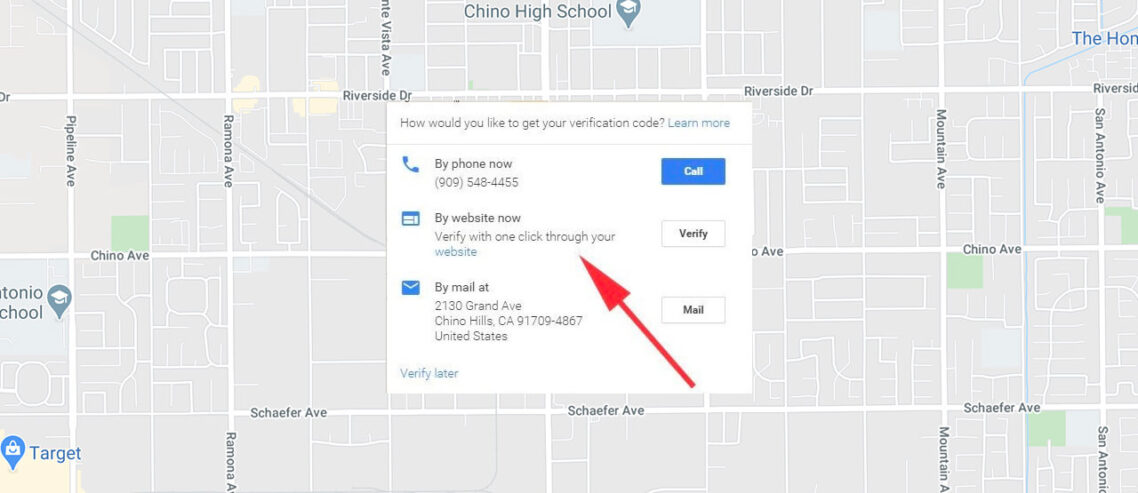
From the rollout of the G+ Local Social merge and bugs showing up when service area businesses attempted to hide their address, Google has said that service area businesses (SABs) should NOT merge their Places listing with their G+ social page. Well, some SABs did not get the message (big surprise eh?) and the question is what should they do now. The answer: Delete the Merged page and rely solely on the dashboard to manage the listing.
Google posted this sticky in the forums:
Are you a Service Area Business (SAB) that has created and verified/merged a social local Google+ page for your business? Read on!
If you do not accept customers at your location, then your address should be hidden. At this time, Google+ currently does not support hidden addresses. You should delete your social local Google+ page from within Google+ (Click on Pages on the ribbon on the left, go to the Settings of your page, and scroll to the bottom and click Delete page).
Don’t worry! You can still manage your business’ presence on Google. Here’s how:
- If you’re a verified business owner in Google Places for Business…
- Manage the listing via the Google Places for Business dashboard. Be sure to hide your address.
- If not, but a listing for your business exists…
- Find the listing for your business and become a verified business owner by clicking on Manage this page on the right-hand side.
- Then, manage the page via the Google Places for Business dashboard
- If no listing for your business exists…
We’ll share updates with you on this thread when we have them.
December 12, 2012
Google has just updated the review content guidelines to explicitly prohibit review stations AND employee reviews.
The changes to the policy are noted in italics:
For instance, as a business owner or employee you should not review your own business or current place of work. Don’t offer money or product to others to write reviews for your business or write negative reviews about a competitor. We also discourage specialized review stations or kiosks set up at your place of business for the sole purpose of soliciting reviews.
December 11, 2012
So which author avatar is the people’s favorite?
Yesterday I promised to share the large scale (1500 responses) survey results as to which author avatar consumers would pick from amongst the local search results when they were asked: If you were selecting a lawyer based on these images, which would you select?
Surprised? I admit I was initially. The white, elderly looking republican type won and won by a statistically significant margin amongst the sample of the ~1300 responses used in the weighted results.
Which attributes caused Mr Old Republican to be more appealing? Was it gravitas? Age? Clothing? Shot distance? Colors? Facial expression?
You can find the complete results of the author avatar survey here. These results will allow you do your own faceted analysis of the data by various demographic criteria and you might want to do so prior to coming to any conclusions. Minimally before you go off and use aging software, change your tie color and redo your photograph read on for insights from Cyrus, AJ Kohn and Matt McGee…

(more…)
December 10, 2012
What makes for a good Author photo in the Local results?
Author photos are increasingly showing in Google’s local search results. Since first appearing in local results in February of this year, author photos have slowly and steadily increased in frequency. In most markets you may only see one author photo in the local results but in some markets a preponderance of results display them. This blended result from a legal search in the Orlando market, with its variety of images, put the question front and center as to what makes for a good avatar in local results.
The interesting variety in the array of photos in this particular search result – some old, some young, no women, bordered, without borders, bright colors, muted colors, looking left, looking right – immediately elevated for me the idea that click through rates AND conversions would in all likelihood be influenced by differences in these photos. In looking at the results perviously, I had encouraged my client, Moses and Rooth Attorneys at Law, to use an open, friendly close up photograph. But after showing these results to several people I realized it likely that there was more to avatar photo preferences than met the eye. And that the role of an author photo in local might be different than in general search results.

I wanted to better understand the issues with these photos so I embarked on an effort to learn how other experts might address the situation and how consumers might evaluate these photos. I invited Cyrus Shepard, who has done thorough testing of his own author photo, AJ Kohn who has written extensively about authorship and Matt McGee, an editor at MarketingLand that has written broadly about social (and who has the best avatar of all time), to give their opinions as to which of these photos were most effective and why.
The second prong of my effort to understand how these images might influence results was to create a consumer survey using the Google survey tool to ask 1500 adult internet users the question: If you were selecting a lawyer based on these images, which would you select? The results of the survey with comments from Cyrus, AJ and Matt will be published in the very near future.
My goal in doing this exercise was not to profile the ideal avatar photo but to start a conversation to get myself and others thinking about what questions we should ask when creating these photos, how might the role of avatar photos for local differ than that of regular author photos and how to get started advising a client as to the direction they should take. In other words, what is a good starting point for your local author image.
I gave Cyrus, Matt and AJ the following charge:
1) Which avatars in the above search result do you prefer and why?
2) What makes for a good avatar. Are there design principles or other general guidance to use when creating one?
3) I am going to do a Google survey and see what consumers say about this specific group of photos
4) And then show you the results of the consumer survey so you can comment and add additional insights
Before I share the initial, pre survey impressions of Cyrus, AJ and Matt with you, take a moment to examine the avatars yourself and decide which ones you like best, which ones you think would perform best in the real world and why…..
(more…)
December 6, 2012
Ol’ Eagle Eye, Matt Gregory, caught a change that I had anticipated. The Local OneBox has been upgraded to the same format as the other OneBox results. The Onebox display, in general, was upgraded earlier in the week in the week to match the mobile display. Note that the user now needs to click into the photo to see more. Whether part of the change or not, fewer review sites are now showing as well.

December 4, 2012
Good friend and advisor, David Mihm, has just announced that Getlisted.org is joining forces with SEOMoz. From the Getlisted Blog:
It’s a great day for us, but we’re equally excited for you guys, our users and audience. Everything GetListed has been about so far–giving away a ton of knowledge and as much great functionality as we could–is about to get super-charged with SEOmoz. With their technical expertise and design-savvy, we’ll be able to scale way beyond what we’ve been able to do as a two-person company. It is awesome to have this firepower behind our site, our product, and our Local Search community. The overlap between organic, social, and local has never been closer, and it’s only going to continue in that direction. It’s phenomenal to have a ready-made team in place that already has some great tools that address those first two areas. And then there’s SEOmoz’s amazing Help Team. Their knowledge and speed is going to help us scale our knowledge to the community so much better than we’ve ever been able to before.
This is an incredible opportunity for David and it is wonderful to see the success that has made for Getlisted. What does this mean for Local U? As David said:
We’ve operated Local U as a collaborative, cooperative, total team effort under the GetListed.org brand. We are all REALLY pleased with the brand that Local U has built on its own, and it will continue to operate independently. While Local U was not part of the acquisition, it’s safe to say that:
- SEOmoz will be involved on a sponsorship level on an extremely regular basis
- David will still be speaking at most/all of the events
- David will continue to offer input on content and logistical considerations and generally be a part of the team
We have already been planning several events for Spring 2013, including return visits to Austin and Seattle, and new events in Corpus Christi, Baltimore, New Orleans, and Houston. So if you’re in any of those markets, email questions@localu.org for more details.
Moses & Rooth Attorneys at Law commissioned me to help them understand how consumers find specialty lawyers. Their goal was to appropriately allocate their marketing dollars in a realistic way between the many choices. Do consumers go to Facebook? How important was their website? What role do reviews play?
To that end, we created a Google Survey as to how consumers might find a specialty lawyer and what things would they look for while online in their search.
We surveyed 1500 consumers with 3 questions as to how they go about the process of choosing a lawyer. Moses & Rooth’s conclusions about the consumer lawyer survey can be viewed here. And the Google data, in its entirety, as to how consumers find lawyers is available here. I would encourage you to view the Google data and create some faceted views of the data to understand the differences in responses due to age, urban density, geography & income.
The weighted sample size included ~1200 respondents and the results were judged to be accurate within ~+3/-3 survey points. The Google Survey produces “a close approximation to a random sample of the US Internet population and results that are as accurate as probability based panels”.
The three questions asked moved from the general to the more specific:
- When you need to find a specialty lawyer how would you start your search?
- If you search for a specialty lawyer on the internet what is most important to you?
- If you searched for a specialty lawyer on Google, what would do you first?
The results of the survey are telling. Here are some top level take aways:
- Word of mouth from clients is critically important
- Search engines are the most likely source for new clients
- Facebook offers little value in finding new clients
- The print Yellow Pages, while not as likely to be used as the search engines, still have some life in the legal industry. This is particularly true in the MidWest and amongst older clients
- Google reviews are 3x more likely to influence a decision than Yelp (question 2)
- A website and online reviews play a critical role once the consumer makes it to Google (question 3).
In a broad sense I think we will find similar responses across a number of industries. It is likely that for many local industry types that the print YP impact might be less important but that the overall results will likely generally hold true. Here’s hoping I get the chance to survey additional industries.
To view the complete the survey data go here. The data is structured so that you can view the results by age group, income and population density. There are some interesting differences that warrant explorations.
If I were a lawyer and saw these results I would:
- Make sure that I am gathering my client’s emails and staying in touch
- Invest in local search and possibly Adwords
- Go out a buy some great bourbon for those lawyers that consistently refer me business
- If I chose to invest in any other marketing, be sure to put in place measurement tools to evaluate and periodically review the investments.
(more…)
November 29, 2012
Google Local is a veritable train wreck for business listing management. The Dashboard is in a state of non functioning disrepair, the + Page path to listing management is full of bugs. The current business types supported by the feature set in the +Page environment is extremely limited. The rules for business listings in MapMaker differ from the rules for Places/+Local/Pages and bots there often run amok with listing data. Factor in the technical difficulties of legitimate listings going into “We currently do not support this location” purgatory and being lost for months on end AND the bevy of old issues like merges and duplicates and the wreck starts to take on epic proportions.
The problems are compounded by Google’s unclear complete lack of guidance as to whether the Dashboard or the social local management environment is the future of their local interface. This adds a level of uncertainty for businesses small and large as to how to proceed with effective listing management. Should a business commit to the new G+ Page local environment? Is this Dashboard being phased out or is it just undergoing a renovation? There are “indications” that both products will exist going forward. Yet Google, rather than laying out a road map so businesses can plan in an intelligent manner, plays 3 card monte with press statements and or makes public utterances that lack clarity.
Has Google Local fallen prey to a failure of management or management turnover?
Is Local under funded?
Is it under focused?
Is it too complicated?
Is the project so big (and incredible) that its gestation period is longer than that of an elephant?
Did the Local team get side tracked by the forced march to social?
Has the strategy of release early and iterate often failed because Google local has forgotten the iterate part?
Are we just seeing a failure of execution?
Who knows. Google is not saying. The problem is that businesses need to plan, they need to keep moving forward on their marketing and unfortunately, for many, Google Local is a key component of that plan.
Here is how I see the situation and my recommendations for the next 60 days as to how a business should proceed given the many, many vagaries of the current situation and why I am suggesting that for most business the best tactic for now is to just sit tight in the old Dashboard and wait:
(more…)
November 28, 2012
Mike Dudas of Google just tweeted that Google has acquired Incentive Targeting to power highly targeted manufacturer and private label coupon programs. He noted that “Incentive Targeting..[does] for retail couponing what Google [does] for online advertising: make simple, relevant, measurable, & effective”
It would appear that the acquisition is for both talent and IP. And as Greg Sterling points out strategic. The company website notes that their “patent-pending technology allows non-technical marketing executives to design sophisticated, relevant promotions—and measure ROI in real time—directly over the Internet”. The product is interesting because it will deliver the coupon either via cell phone & social networks or via traditional methods of print and register receipt AND closes the loop for easy redemption and tracking.

It is an intriguing acquisition in a number of ways. It obviously puts Google directly into the coupon business. In the past they have never committed to couponing in any significant way and it had been said that Larry Page in fact had a disdain for coupons. Their past behaviors have certainly reflected a certain schizoid, on again off again approach to coupons.
This product, while currently serving large chains and manufacturers, could readily scale down to a single merchant and fit into the SMB dashboard/integrated marketing portal that is rumored to be in the works. Imagine a single location grocery store or our local 30 location chain being able to have an advertising person easily issue coupons across media & track the results in real time. It sounds like a winner to me. It could obviously move beyond groceries as well.
Now lets hope that it sees the light of day sooner than Google’s last local purchases of PunchD and TalkBin.
November 27, 2012
There has been a persistent bug in G+ Local’s (mis)handling of international phone numbers that Barry pointed out in his blog today. This problem has been on-going for a number of months and Google is aware of the issue.
However I found the irony of these two posts showing together in my G+ stream too rich to not note. As I pointed out in another post that in Google Local:
Google’s policy of release early and iterate often and innovate often, leads to more than its fair share of bugs particularly when they forget the iterate often part.